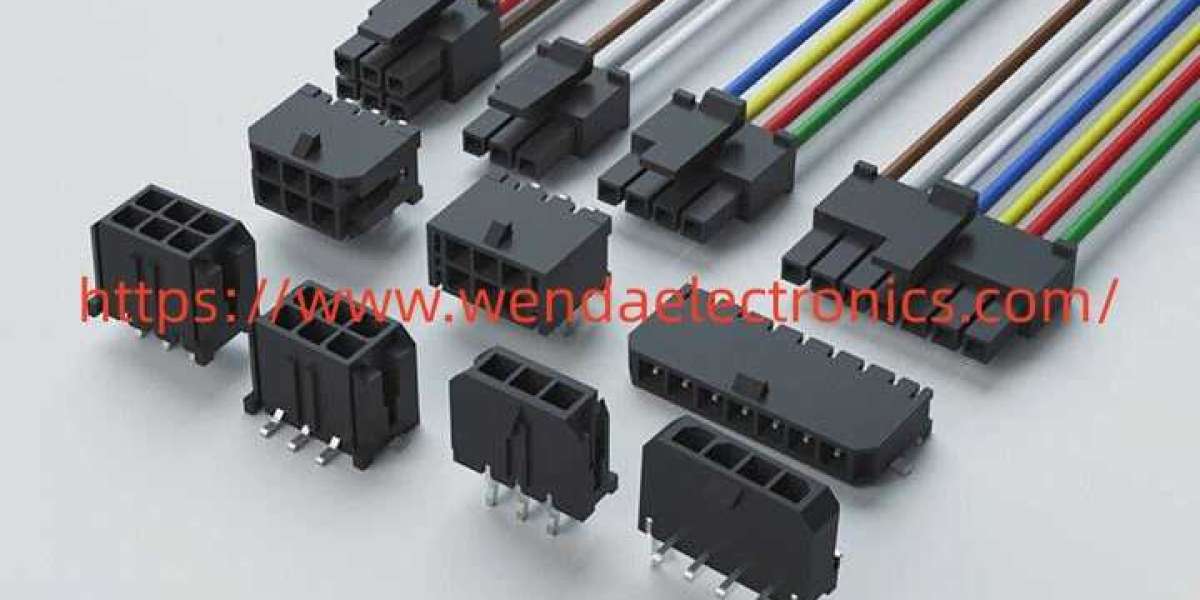

Modular electronic equipment often relies on several circuit boards working together inside a shared enclosure. Each board may handle a different task, such as power management, control, processing, or communication. The interfaces connecting these boards influence how the complete product is assembled and maintained. When selecting a Board to Board Power Connector, engineers should consider how the connection supports the product's internal architecture, rather than focusing only on electrical contact. Material compatibility, mechanical positioning, assembly access, and the relationship between connected modules all contribute to a practical design.
The conductive elements require materials that balance electrical properties with mechanical durability. Copper alloys are widely used for connector contacts because they can provide suitable conductivity while allowing terminals to be formed into different shapes. Depending on the intended application, contact surfaces may receive plating to help manage oxidation and maintain consistent contact behavior. The choice of surface treatment should reflect the operating environment and the expected mating conditions. Insulating housings are commonly produced from engineering plastics selected for electrical insulation, structural stability, and manufacturing suitability. Their role extends beyond separating contacts: they also help guide mating components and protect the internal connection structure. Buyers should evaluate terminal and housing materials together because their interaction affects the overall connector design.
Selection should begin with the architecture of the electronic product. Engineers need to identify which boards exchange power, how the boards are positioned, and whether the connector must accommodate other functions alongside power delivery. Some products use removable modules, while others contain circuit boards that are assembled permanently during manufacturing. This distinction affects the preferred connection structure and the importance of future access. The position of nearby components, enclosure supports, heat-generating elements, and cable routes should also be reviewed. A connector that appears suitable on an individual circuit board may create interference after the complete assembly is considered. Reviewing mechanical drawings alongside PCB layouts can help identify these issues during product development.
Mechanical alignment is a particularly important part of multi-board connection design. The connector must guide the mating sections into the intended position without placing unnecessary stress on the circuit boards. Housing geometry, locating features, mounting arrangements, and contact placement all influence how accurately the boards engage. In products exposed to movement or vibration, the mechanical support of the boards should be considered together with the connector's retention structure. The connector should not be expected to compensate for an inadequately supported circuit board. Appropriate enclosure design and mounting support help distribute mechanical forces and protect the electrical interface during normal operation.
The electrical function depends on the quality of the contact interface and its integration with the surrounding circuit. Conductive terminals establish the path between boards, while the contact arrangement helps maintain separation between different electrical connections. Engineers should consider current paths, circuit organization, insulation requirements, and the possibility of unintended contact during assembly. In some applications, the connector also needs to support convenient module replacement or inspection. Clear contact identification and appropriate board orientation can help technicians avoid connection errors. Electrical testing and inspection during product development can help confirm that the selected connector is compatible with the intended circuit design and operating conditions.
Manufacturing considerations also influence connector selection. Terminal forming, plating, plastic molding, and component assembly must work together to produce consistent parts. Variations in contact shape or housing dimensions may affect mating alignment and assembly quality. Manufacturers therefore benefit from inspection procedures that examine terminal condition, housing integrity, contact positioning, and the consistency of finished components. For businesses developing products through repeated production cycles, it is useful to discuss sample approval, assembly methods, and quality expectations with suppliers before finalizing the design. Early communication can help identify manufacturing challenges before they become difficult to correct.
From the user's perspective, a well-designed connection system can make electronic equipment easier to assemble, service, and upgrade. Although internal connectors are rarely visible during normal operation, their placement affects how technicians access circuit boards and replace modules. A connection that can be engaged in a clear, controlled manner may simplify production work, while an accessible arrangement can reduce unnecessary handling during maintenance. Product designers should also consider whether the connector's position allows technicians to inspect surrounding components without disturbing unrelated connections. These practical details can influence the serviceability of the finished equipment.
Appearance and physical arrangement contribute to the overall organization of an electronic assembly. A compact housing may help designers use internal space efficiently, while a clearly defined shape can make the connection easier to identify during production. Contact orientation, housing color, mounting features, and the spacing between boards all influence the visual order of the internal layout. A consistent connector design can also support a more organized product family when different models share a similar electronic architecture. However, appearance should remain aligned with electrical and mechanical requirements, ensuring that visual simplicity does not compromise insulation, alignment, or access.
Zhejiang Wenda Electronics Co., Ltd. provides connector solutions for businesses involved in electronic component sourcing and product development. When evaluating a board-to-board application, customers can discuss circuit architecture, board positioning, electrical requirements, material preferences, assembly methods, and maintenance expectations with the company. Sharing these details helps clarify the connector structure needed for the intended product and supports communication during the selection process. Further information about the company's connector products and services is available at https://www.wendaelectronics.com.