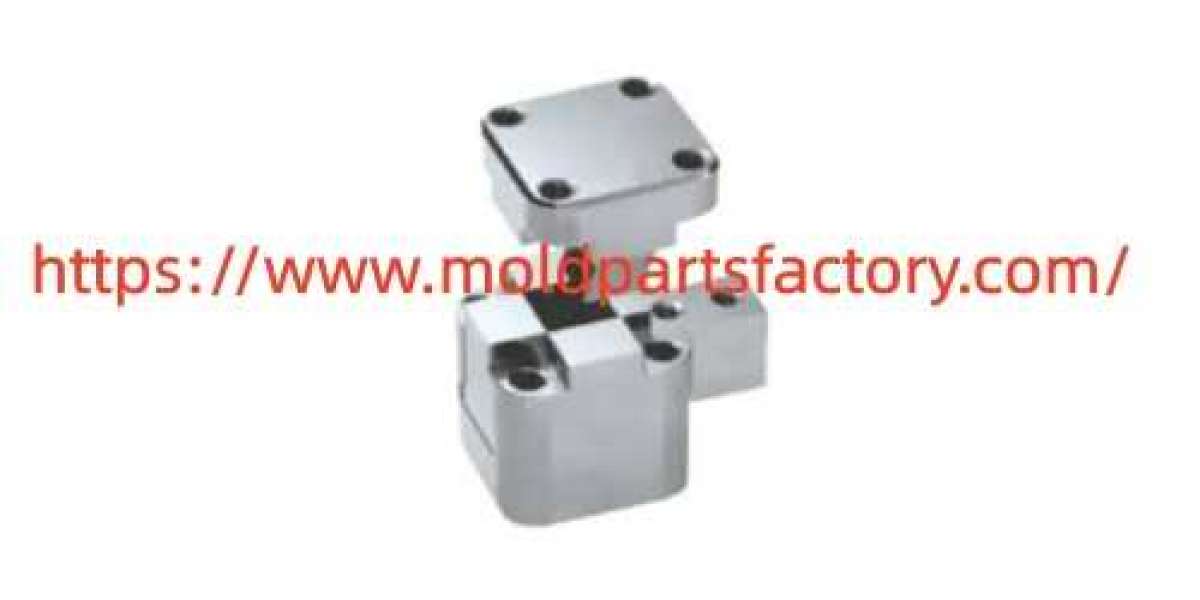

Side Core Pulling should be evaluated from the complete mold structure rather than from a single component dimension. When a plastic part contains a side hole, recessed feature, hook, groove, or other geometry that cannot move directly with the normal mold opening direction, an additional lateral movement may be required before the part can be released. This makes the selection process closely connected with part geometry, mold layout, movement distance, and available installation space.
The part drawing should be the starting point. Designers need to identify every feature that may interfere with normal release. A draft analysis can help locate areas that do not have a suitable release direction. Before adding a mechanical solution, it is also worth checking whether the product geometry can be adjusted through a different opening direction or a small design change. In some cases, a change to the part can reduce tooling complexity.
Once the geometry has been confirmed, movement distance becomes an important consideration. The required travel should allow the forming element to clear the molded feature completely before the product is ejected. Additional clearance may be needed to provide a practical safety margin. Industry design references commonly recommend calculating travel from the depth of the side feature while considering extra clearance for release and maintenance.
The direction of movement should also match the product geometry. A straight lateral movement may work for a simple side opening, while a more complicated structure can require an angled path or a combined mechanism. Designers should consider the relationship between the movement angle, available space, and forces generated during mold opening. An unsuitable arrangement can create excessive friction or unwanted loads on nearby components.
Mold space deserves the same attention. Before confirming dimensions, buyers should review the cavity, inserts, cooling channels, ejector arrangement, guide areas, locking elements, and surrounding plates. A mechanism that appears suitable in an isolated drawing may interfere with another component once the complete assembly is considered. Three dimensional mold simulation can be useful for checking movement and clearance throughout the opening sequence.
The locking arrangement is another practical point. During injection, the forming element needs adequate support against molding pressure. The structure should remain stable while the material fills the cavity and pressure is applied. During opening, the movement should then occur in the intended sequence. Proper coordination between locking and retraction helps reduce unwanted movement and contact between components.
Material and surface treatment should be selected according to the working environment. Repeated sliding contact can create wear, particularly when lubrication, hardness, alignment, or surface finish is not properly considered. Buyers can ask about material grades, heat treatment, hardness, surface finishing, and recommended lubrication practices when evaluating a component for regular production use.
Machining accuracy is also worth reviewing. Contact surfaces, guide areas, mounting holes, and reference locations need to correspond with the mold drawing. If the dimensions are not coordinated, assembly may require additional adjustment. Accurate machining can also make future replacement easier because technicians have clearer reference dimensions when servicing the tooling.
The production environment should be considered as well. A mold used for occasional sampling may have different requirements from one used for repeated production. Cycle frequency, resin characteristics, temperature, contamination, lubrication intervals, and inspection access can all influence component selection. A practical design leaves enough space for maintenance instead of focusing only on initial assembly.
Another point buyers often overlook is communication with the manufacturer. Providing a detailed drawing, required dimensions, movement distance, material preference, application conditions, and expected production requirements gives the supplier a better basis for reviewing the request. This is particularly useful when the component needs to work together with several other tooling elements.
Moldpartsfactory supplies mold components for manufacturers working on injection tooling projects. The company can work from application requirements and technical drawings when buyers need to evaluate dimensions, materials, machining conditions, or structural compatibility. For projects involving precision machining requirements, related equipment such as a Tormach Surface Grinder may also be considered as part of the broader manufacturing process.
A sensible purchasing decision should therefore go beyond checking whether a component fits a drawing. Designers should examine the product geometry, movement distance, mold space, locking condition, material, machining tolerance, surface condition, maintenance access, and production environment together. This approach gives manufacturers a clearer basis for selecting components that match their actual tooling requirements.
Manufacturers looking for mold component options and product details can review the available range through https://www.moldpartsfactory.com/product/ and discuss their project requirements according to the actual mold structure, dimensions, and production conditions.