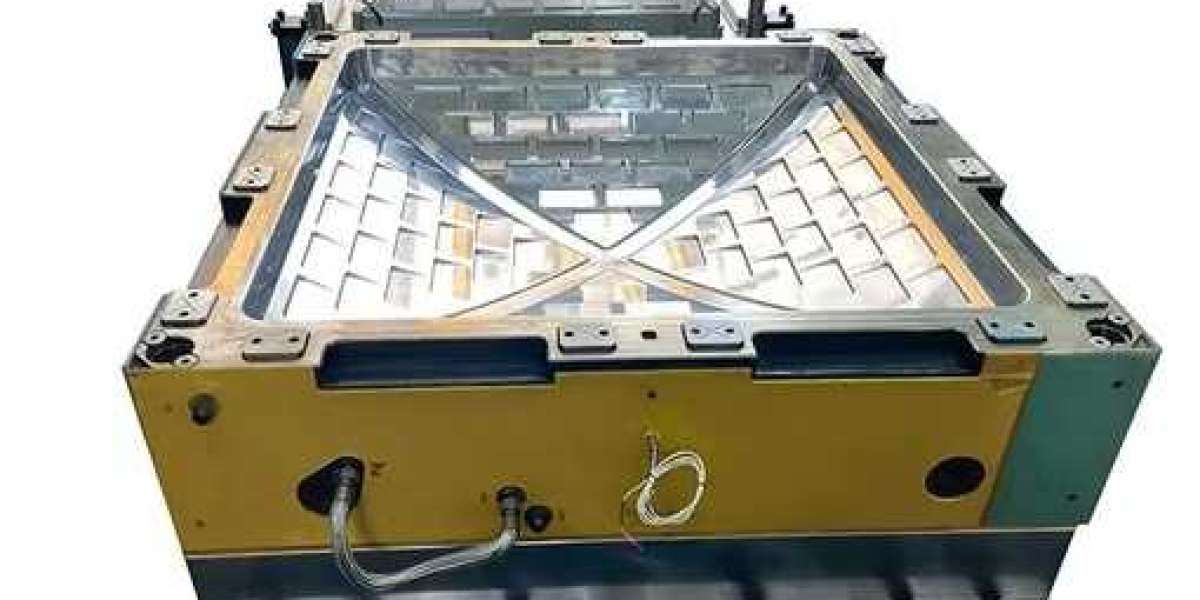

BMC Mould is used in manufacturing environments where composite materials need to be formed into detailed industrial components. Automotive systems, electrical equipment, appliances, machinery, and transportation products can all involve molded parts with specific dimensional and functional requirements. Bulk molding compound typically combines resin, chopped reinforcement, fillers, and additives, and it can be processed through methods such as compression or injection molding.
Electrical Equipment
Electrical manufacturing is one of the important application areas for bulk molding compound. Components such as housings, covers, insulation parts, switchgear elements, connectors, and protective structures may require carefully controlled geometry and insulating characteristics.
The material can be formed into parts with ribs, mounting points, openings, and other detailed features. This makes it useful when manufacturers need a molded component that combines functional geometry with a suitable electrical environment.
For equipment manufacturers, the tooling design needs to correspond with the final component. Cavity geometry, release arrangements, surface condition, and dimensional relationships can all influence production planning.
Automotive Components
The automotive sector also uses composite molded components across different vehicle systems. Applications can include housings, covers, lighting related components, electrical structures, and other shaped parts.
Automotive production often involves repeated manufacturing cycles, so tooling needs to support the intended process and production volume. Component geometry may also include curved areas, mounting sections, ribs, or integrated features that require careful tooling development.
BMC applications in automotive manufacturing have been documented for components such as lighting parts, housings, throttle related components, and other vehicle systems.
Household Appliances
Appliance manufacturers can use molded composite components for housings, internal supports, covers, electrical structures, and other shaped parts.
The production requirements can differ significantly depending on the appliance. A component surrounding an electrical assembly may have different requirements from an exterior housing or structural support.
For this reason, tooling development should begin with the actual product design. Manufacturers can review the component dimensions, installation points, surface requirements, material conditions, and production method before finalizing the tooling structure.
This approach also gives buyers an opportunity to discuss future production requirements before manufacturing begins.
Industrial Machinery
Industrial equipment often contains protective housings, electrical enclosures, covers, mounting structures, and other molded components. These parts may operate around vibration, temperature changes, mechanical assemblies, or electrical equipment.
Composite molding can be suitable for applications where the component geometry is relatively detailed and where a molded structure fits the equipment design.
The tooling process should take the complete assembly into account. Openings must correspond with connected components, mounting points need appropriate positioning, and surfaces may need to match surrounding parts.
A clear design review can therefore help manufacturers avoid unnecessary changes after tooling production starts.
Transportation Equipment
Transportation systems can involve molded composite parts in areas where component geometry, insulation, surface finish, and production repeatability are relevant.
Rail transportation and other mobility equipment may use composite components for electrical structures, interior assemblies, protective housings, and related applications. The exact requirements depend on the vehicle and its operating environment.
For these projects, buyers can discuss temperature conditions, installation methods, production volume, dimensional requirements, and inspection expectations before selecting tooling.
This makes the tooling decision part of the wider product development process rather than an isolated purchasing activity.
Why Tooling Design Matters
The same composite material can be used for very different components, so the tooling cannot be selected only according to the material name. Part geometry and manufacturing conditions also influence the design.
A component with multiple ribs and recessed sections may require a different cavity arrangement from a simple cover. Similarly, parts produced through compression molding may require different considerations from components manufactured through injection molding.
BMC can be processed through compression, transfer, and injection molding, depending on the formulation and application.
This flexibility gives manufacturers several production routes, but it also makes project planning important.
How Buyers Can Evaluate A Tooling Partner
When sourcing custom composite tooling, buyers can review several practical factors.
The first consideration is whether the manufacturer can understand the component drawing and production purpose. Engineering communication is particularly important when the project involves complicated geometry.
The second consideration is production coordination. Buyers can ask about machining, assembly, trial procedures, dimensional inspection, and modification processes.
The third consideration is application awareness. A tooling partner should be able to discuss how the intended molding process relates to the component design.
Finally, communication after production can matter when the customer needs assistance with installation, adjustment, maintenance, or future tooling changes.
Supporting Different Industrial Requirements
Compositemould can work with buyers who need customized tooling for different composite component applications. Rather than treating every project as the same, the development process can focus on the component structure, intended production method, material conditions, and application environment.
For manufacturers, this approach provides a practical way to connect product design with tooling development. It can also help purchasing and engineering teams communicate around the same technical requirements.
Companies preparing composite component projects can review available product information at https://www.compositemould.com/product/ and use it as a starting point when discussing their application requirements.