
A Spectrum of Solutions for Digital Banking
The transition to cardless cash access is not a monolithic process; the market offers a diverse range of technological pathways. Choosing the right Cardless ATM Market Solution is a critical strategic decision for a financial institution, requiring a careful balance of cost, security, user experience, and the existing state of its ATM fleet. The available solutions exist on a spectrum, from software-based approaches that can be deployed quickly and cost-effectively to hardware-intensive methods that offer a more seamless and futuristic user experience. The primary solutions currently shaping the market are those based on One-Time Passcodes (OTP) generated within a mobile app, QR code-based systems, and Near Field Communication (NFC) technology. Each of these solutions has a distinct workflow and unique set of advantages and disadvantages. The optimal choice often depends on a bank's specific goals, whether they are prioritizing speed of deployment, minimizing upfront investment, or creating the most frictionless customer journey possible in a competitive marketplace.
The OTP / App-Generated Code Solution
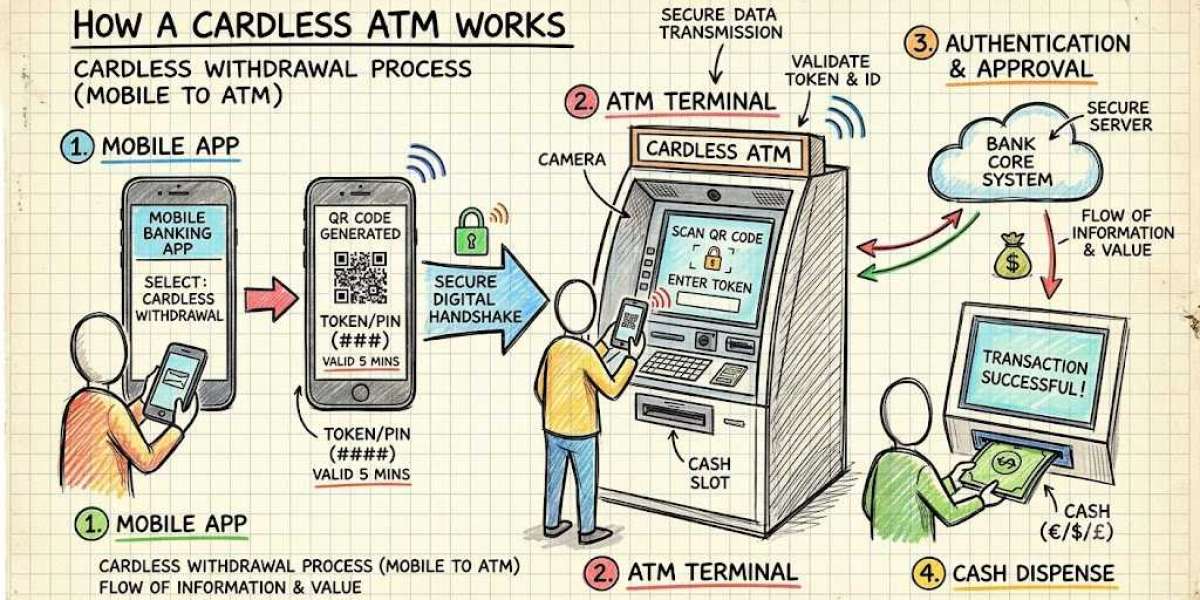
The One-Time Passcode (OTP) solution is one of the most foundational and widely adopted methods for enabling cardless withdrawals. In this workflow, the customer initiates the transaction within their secure mobile banking app, selecting the withdrawal amount. The bank's server then generates a unique, time-sensitive code (typically 8-12 digits) and displays it within the app. The customer then approaches any of their bank's participating ATMs, selects the "Cardless Withdrawal" option on the screen, and manually enters the code along with their standard PIN. The ATM validates the code and PIN with the bank's server and dispenses the cash. The primary advantage of this solution is that it can often be deployed with a simple software update to the ATM, as it requires no new physical hardware. This makes it a highly cost-effective and rapid way for a bank to introduce cardless functionality across a large portion of its fleet. The main drawback is the user experience, which can be slightly clunky, requiring the user to remember and type a long code.
The QR Code-Based Solution
The QR (Quick Response) code-based solution offers a more streamlined and interactive user experience compared to the OTP method. This solution can work in two ways. In the first, more common method, the user stages the withdrawal in their mobile app, which then generates a dynamic QR code on the phone's screen. The user holds their phone up to a scanner installed on the ATM, which reads the code to identify the transaction. In the second method, the ATM screen displays a QR code, and the user scans it with their phone's camera within the banking app to initiate the secure handshake. In both cases, the QR code contains the encrypted transaction details. The main advantage of this solution is its high level of security and an improved user experience that feels more modern than typing a code. While it may require a hardware scanner to be added to some older ATMs, many modern machines with cameras or touch screens can be enabled with a software update, making it a popular and balanced choice for many institutions.
The NFC / Contactless Solution
The Near Field Communication (NFC) solution represents the most seamless and frictionless cardless withdrawal experience available today. This solution leverages the same technology behind popular retail payment systems like Apple Pay, Google Pay, and Samsung Pay. The user simply pre-stages the transaction in their mobile wallet or banking app and then holds their smartphone near the designated contactless reader on the ATM. The NFC chip in the phone communicates securely with the NFC reader on the ATM to transfer the tokenized transaction data. The customer then typically just needs to enter their PIN on the ATM keypad to complete the transaction. The primary advantage of this solution is its incredible speed and ease of use—it's a simple "tap and go" motion that consumers are already familiar with. The main challenge is that it absolutely requires the ATM to have a dedicated NFC reader, which means it is often limited to newer machines or those that have undergone a specific hardware upgrade. Despite the hardware cost, the superior user experience makes this the premium solution that many banks are migrating toward as they refresh their ATM fleets.
Explore More Like This in Our Reports:
Customer Information System Market