
The rapid expansion of cloud computing, hybrid work environments, and AI-driven business operations has fundamentally changed the role of IT within modern enterprises. What was once viewed as a support function has evolved into a strategic enabler of employee productivity, customer experience, and business resilience. As a result, organizations are increasingly investing in IT Service Management (ITSM) tools that can automate workflows, improve service delivery, and provide end-to-end visibility across complex IT environments.
QKS Group’s IT Service Management Tools market research provides a comprehensive assessment of the global market, examining emerging technology trends, evolving enterprise requirements, competitive dynamics, and the future outlook of IT service operations. The research is designed to help technology vendors refine their growth strategies while enabling enterprise buyers to evaluate vendor capabilities, competitive differentiation, and long-term market positioning.
The Evolution of ITSM from Ticketing to Enterprise Service Management
Traditional ITSM platforms were primarily focused on incident, problem, and change management. While these functions remain critical, modern enterprises now expect ITSM solutions to support a much broader set of business processes. Today’s leading platforms extend beyond IT operations to enable Enterprise Service Management (ESM), allowing organizations to manage HR services, facilities requests, procurement workflows, security operations, and employee onboarding through a unified service platform.
This shift is being driven by the demand for consistent, consumer-grade digital experiences. Employees expect the same level of convenience from internal services that they receive from external digital applications. Consequently, organizations are prioritizing self-service portals, AI-powered virtual agents, omnichannel support, and automated workflow orchestration as core ITSM capabilities.
AI and Hyperautomation Are Reshaping Service Operations
Artificial Intelligence has become one of the most significant drivers of innovation in the IT Service Management Tools Market. Generative AI, conversational AI, and predictive analytics are enabling organizations to move from reactive support models to proactive and increasingly autonomous service operations.
Modern ITSM platforms can automatically classify incidents, recommend resolutions, summarize tickets, generate knowledge articles, and identify recurring issues before they impact users. When combined with AIOps (Artificial Intelligence for IT Operations), these capabilities help organizations reduce mean time to resolution (MTTR), improve service availability, and minimize operational disruptions.
Hyperautomation is further accelerating this transformation. By integrating robotic process automation (RPA), low-code workflow automation, and AI-driven decision-making, enterprises can eliminate repetitive manual tasks and redirect IT teams toward higher-value initiatives such as innovation, cybersecurity, and digital transformation.
Cloud-Native ITSM Is Becoming the Standard
The migration to cloud-native architectures is another defining trend shaping the market. Organizations are increasingly adopting SaaS-based ITSM platforms because they offer faster deployment, lower infrastructure costs, continuous feature updates, and greater scalability. Cloud-native solutions also provide stronger integration capabilities with collaboration tools, monitoring platforms, security solutions, and business applications.
For enterprises operating across multiple geographies, cloud ITSM enables standardized service processes and centralized governance while still supporting local operational requirements. This flexibility has become particularly important as organizations continue to manage distributed workforces and hybrid IT environments.
Why Vendor Evaluation Matters More Than Ever
With a growing number of ITSM vendors offering overlapping capabilities, selecting the right platform has become increasingly challenging. Enterprises must evaluate not only current functionality but also a vendor’s innovation roadmap, integration ecosystem, scalability, customer support model, and ability to deliver measurable business outcomes.
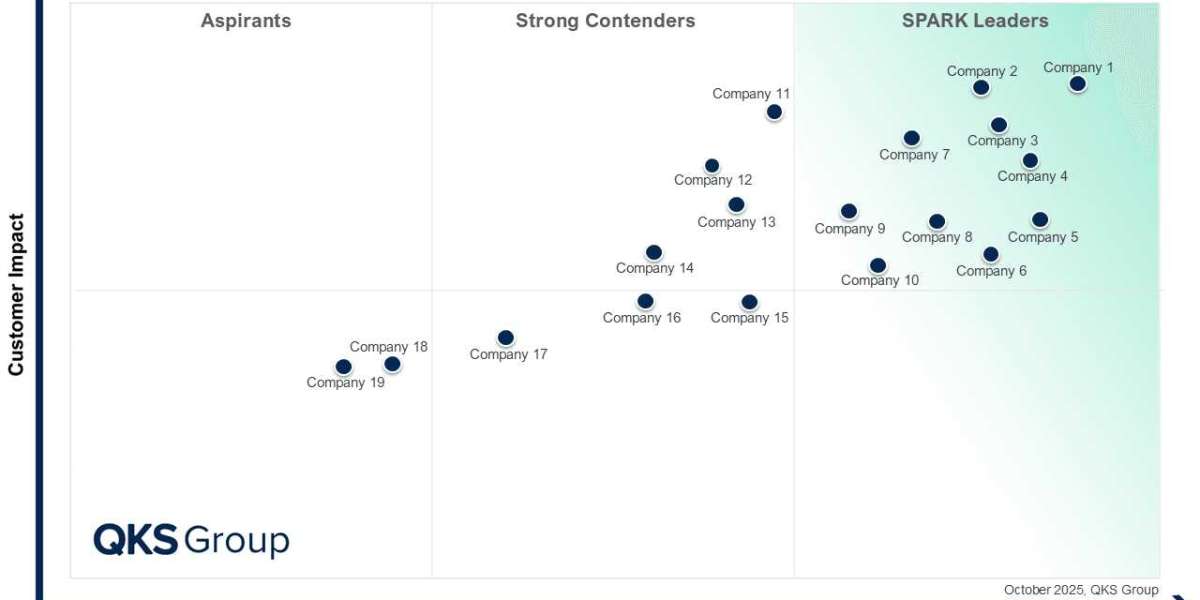
QKS Group addresses this challenge through its proprietary SPARK Matrix™, which provides a detailed competitive analysis of the global IT Service Management Tools market. The SPARK Matrix evaluates vendors across two critical dimensions: technology excellence and customer impact. This framework enables organizations to compare leading providers using a consistent and objective methodology, making it easier to identify solutions that align with their operational and strategic requirements.
A Competitive Landscape Defined by Innovation
The SPARK Matrix includes analysis of globally recognized vendors such as Alemba, Aranda Software, Atlassian, BMC Software, EasyVista, Freshworks, Halo Service Solutions, IFS, Ivanti, Matrix42, OpenText, Pandora FMS, Proactivanet, Serviceaide, ServiceNow, SolarWinds, SymphonyAI, TOPdesk, and USU.
These vendors are competing across several key dimensions, including AI-driven automation, workflow orchestration, enterprise service management capabilities, integration breadth, analytics, user experience, and deployment flexibility. Some vendors are focusing on large enterprise transformation initiatives, while others are differentiating through ease of deployment, cost efficiency, or specialized industry capabilities.
The increasing emphasis on AI has intensified competition, with vendors investing heavily in virtual agents, autonomous remediation, predictive service management, and intelligent workflow optimization. As enterprises seek platforms that can support both operational efficiency and strategic business transformation, innovation velocity is becoming a critical differentiator.
The Future Outlook of the ITSM Tools Market
Looking ahead, the IT Service Management Tools Market is expected to evolve toward increasingly intelligent and autonomous service ecosystems. Several trends are likely to shape the next phase of market growth:
- Generative AI integration for automated content creation, ticket summarization, and conversational support.
- Autonomous incident resolution powered by AI and AIOps.
- Unified observability and service management through tighter integration with monitoring and analytics platforms.
- Experience-level management (XLA) as organizations shift from SLA-based metrics to employee and customer experience outcomes.
- Industry-specific service management solutions tailored for healthcare, manufacturing, financial services, and public sector organizations.
As digital business initiatives continue to expand, ITSM will play a central role in enabling operational agility, cybersecurity resilience, and workforce productivity. Organizations that invest in intelligent, integrated, and automation-first service management platforms will be better positioned to scale their operations and deliver superior digital experiences.
Conclusion
The global IT Service Management (ITSM) Tools Market is entering a new era defined by AI-driven automation, cloud-native architectures, and enterprise-wide service transformation. Modern ITSM platforms are no longer limited to managing IT tickets; they have become strategic platforms that connect people, processes, and technology across the enterprise.
QKS Group’s comprehensive market research and proprietary SPARK Matrix™ provide technology vendors and enterprise buyers with a powerful framework for understanding market dynamics, evaluating competitive differentiation, and identifying the vendors best positioned to support future digital service initiatives. As organizations continue their journey toward intelligent IT operations and enterprise service excellence, the ability to select the right ITSM partner will be a critical factor in achieving long-term business success.





